
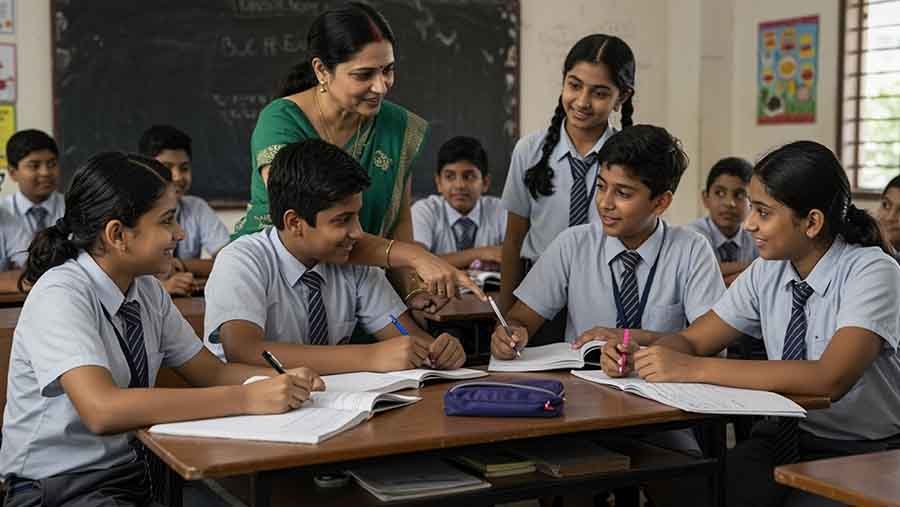
I often wonder: what did I really learn in school?
Reading. Writing. Memorizing. A little bit of science and math. A little bit of art or music. Discipline. Etiquette. Manners.
What else?
How to prepare for time-bound things, like exams and routine tests. Competitions with peers. Obeying the teachers.
What else?
Whenever I think about schools, I feel something is missing. I don’t doubt that Indian schools, like most schools in the world, are full of knowledge. They do teach many things that we apply in the world daily.
But the main reason we go to school is this societal formula: Go to school. Get good grades. Get into a good college. Get a good job.
That’s the formula Indian schools sell to millions of children every year.
And why not? This has worked for decades. Sort of. India needed doctors, engineers, bankers, technicians, and bureaucrats. Schools became factories to produce them. They rewarded obedience. They praised memorization. They celebrated discipline.
But the world has changed now. That formula doesn’t work anymore.
The economy is shifting. The technology is evolving rapidly. The job market is global and it’s not local only. There are lots of big opportunities. But they are for those who can think, who are flexible, and who can build. They are not for those still stuck memorizing answers.
The problem is that Indian schools are still teaching in the old way. It means an entire generation is stepping into the real world completely unprepared.
What do Indian schools miss teaching?
Here’s what Indian schools are not teaching:
1. How to think (not just memorize)
When it comes to memorizing, Indian schools are unmatched. Ask a student to recite the periodic table, and they’ll do it. Ask them to solve a calculus problem, and they’ll crush it.
But when it comes to thinking differently, the classroom goes silent.
Because schools don’t teach how to think. They teach how to repeat. Teachers who promote curiosity are rare. Schools that encourage curiosity are rarer.
Schools don’t reward curiosity—they punish it. They don’t ask for new ideas. They ask for the right answer. If a student comes with a different approach, teachers snub them. What do they usually say?
“Do you mean that what I’m teaching is wrong? Do you want numbers or not? Then follow what I’m saying.”
The result? Students graduate with knowledge, but not with thinking skills.
And in today’s world, thinking for yourself is the skill that matters most.
2. How to handle failure
In India, failure feels like a curse.
One bad grade and the parents go into panic mode. Relatives taunt. Teachers label you average.
The result? Children grow up thinking failure is something to fear. They should hide it and avoid it at all costs.
Common sense says that failure is not the end. Failure is the process.
Every person you admire has failed multiple times. Every entrepreneur who built a company had ten ideas that didn’t work. Every artist who made a masterpiece painted dozens of things nobody remembers. Every leader who looks fearless today learned courage by failing again and again in private.
And yet, Indian schools teach the exact opposite. They condition children to play it safe. They want them to pursue only those things that they get right the first time. They want them to measure their self-worth by grades, not by growth.
What happens when these kids become adults? They keep choosing safe. Safe degrees. Safe jobs. Safe lives. They choose security over risk. They choose mediocrity over potential. They choose society’s dreams over their own.
This is the skill schools should be teaching: How to fail properly. How to reflect. How to extract the lesson. How to get up without carrying shame.
Because the ones who know how to fail are the ones who actually succeed.
3. How money works
Most students in Indian schools don’t have an idea of how money works. They learn different things in school, but not about money.
After school, we step into the real world and start earning. When we hold our first paycheck, we don’t know how to use that money properly.
We struggle to budget. We don’t know how to invest. We don’t know the power of compounding. We don’t know the difference between good debt and bad debt. We don’t even know how to calculate the taxes.
Then what happens?
The first paycheck goes to clothes, gadgets, and parties with friends or family.
Then we get our first credit card—the magical thing that lets us buy things without worrying much. We stop counting cash in our purse before buying anything. We swipe that credit card without understanding what “18% APR” means.
The car loan feels harmless until the EMIs start drowning you. The house purchase is done without reading the fine print.
And by the time you realize the importance of saving and investing, you have already wasted a decade.
This isn’t a small problem. It’s systemic.
Indian schools treat money as if it’s a dirty topic. Something you shouldn’t discuss in public. Focus on other academic subjects and earn the grades. Nobody wants to talk about Financial literacy during school years as it doesn’t matter.
But the hard truth is: Money runs the world. Not knowing how it works is like trying to play a game without understanding the rules. You’ll keep moving, but you’ll never win.
The result?
India is home to many educated professionals who lack financial knowledge. They work hard their entire lives but never build real wealth.
4. Communication skills
Indian schools make you memorize grammar rules. They make you analyze poetry and stories. They teach you how to write essays that follow a formula.
But they forget to teach you one skill that actually shapes your career and your life: how to communicate with people.
There is no encouragement from teachers and schools to prepare students as good communicators.
Think about it. How will the students feel when they know:
- How to walk into a room and speak with confidence.
- How to handle crucial conversations.
- How to pitch an idea so it sounds irresistible.
- How to write effective emails and messages with proper etiquette.
- How to tell a story that makes people lean forward, listen, and remember you.
These are the skills that determine who rises and who stays stuck in life.
Companies don’t promote employees who fumble in meetings, but those who speak with clarity. Investors fund the entrepreneurs who can pitch with conviction. The leader who can tell a story that people want to be a part of gets the most followers.
Communication isn’t a “soft skill.” It’s the skill. It’s the multiplier that makes every other skill valuable.
But schools don’t prepare students for this. They produce smart, capable minds who don’t know how to speak up. They produce students who can pass exams but freeze in front of an audience. They produce workers, not communicators.
5. Emotional intelligence
Schools talk about IQ more. They reward test scores, memorization skills, logic, and memory recall.
But they completely neglect Emotional Intelligence, also known as Emotional Quotient (EQ). They don’t teach you how to understand your own emotions and others. They don’t teach you how to handle conflict. How to stay calm under pressure. Or how to deal with rejection or stress.
Life is full of emotions. So emotional intelligence matters a lot.
- People fail in their careers because they can’t manage workplace politics. They can’t control their tempers. Or they can’t handle pressure.
- People fail in relationships because they don’t know how to listen, empathize, or forgive.
On the other hand, only those leaders inspire who know how to connect emotionally. Only those creative people are successful who know how to channel their emotions. I am talking about those people who can channelize their curiosity, their frustration, their joy, their pain into something meaningful.
Without emotional intelligence, all the knowledge in the world is useless. And yet, schools behave as if EQ doesn’t exist.
They never teach a child:
- How to deal with anxiety before tests and exams.
- How to communicate honestly with a friend instead of gossiping.
- How to handle jealousy without destroying relationships.
- How to use stress as fuel instead of letting it turn into burnout.
Instead, children are told: “Be strong. Don’t cry. Don’t talk back. Just focus on your marks.”
The role of schools is not just to create successful doctors, engineers, lawyers, and efficient workers, but also to make them emotionally intelligent.
6. Creativity and originality
In Indian schools, creativity is not a priority. It’s an afterthought.
Art, music, writing, theater — they’re extracurriculars. Something that you do after the real subjects. The real subjects are math, science, and social studies.
This is the problem. The world doesn’t reward memorization. It rewards creation.
Apple didn’t become Apple by following the manual. Tesla didn’t disrupt the car industry by coloring inside the lines. Infosys didn’t become a global powerhouse by copying someone else’s blueprint. Zomato didn’t become a household name by sticking to safe bets.
All of them succeeded because they saw something new. They built something different.
And yet, schools teach the opposite. They crush originality. They say:
“Stick to the syllabus.”
“Don’t ask unnecessary questions.”
“That’s not how it’s done.”
“Follow what I’m telling you. Don’t use your mind.”
Children are punished for daydreaming. They’re marked down for “wrong methods” even if they reach the right answer. They’re told: “Do what you’re told, or you won’t succeed.”
But can such a mindset prepare students for success? No, it prepares them to be replaceable.
By the time most children graduate, their creativity has been buried under years of rules and red ink. They’ve learned how to follow instructions, but they’ve forgotten how to imagine.
And in today’s world, imagination is the ultimate currency.
7. How to work with people
We can’t achieve much alone. We need other people.
Every major success story we admire, teams built them. Major companies, successful movements, and history-changing revolutions, all of them were not possible without working with other people.
Yet schools in India still act as if learning is a solo sport.
“Sit quietly.”
“Don’t talk.”
“Don’t share answers.”
“Don’t copy.”
“Don’t collaborate.”
For twelve years, you’re conditioned to see your classmates as competition. Their success is your failure. The system makes you fight for ranks, not for relationships.
Then you graduate and step into the real world. And suddenly everything is flipped.
Now you’re expected to work in teams, manage conflicts, communicate across departments, build trust with clients, and even lead others.
But no one ever trained you for this. Schools should have been training grounds for teamwork.
8. How to question authority
In Indian schools, everything is about authority. The teacher is always right. The system is never wrong. The syllabus is unquestionable.
The main motto of schools is to condition students to obey the system, not to challenge the system.
But schools forget that every real leap in human progress has come from someone who questioned authority.
- Galileo questioned the Church’s view of the universe.
- Gandhi questioned the British Empire’s right to rule.
- Every entrepreneur questions the “normal” way of doing business.
Progress happens when there is a rebellion, not blind obedience.
And yet, Indian schools don’t encourage rebellion. They punish it. Ask too many questions in class, and you’re labeled “arrogant.” Challenge a teacher, and you’re seen as “disrespectful.”
The result? Students come out of schools knowing how to follow orders, but not how to think independently. They enter the workforce trained to nod yes, not to ask why.
And obedience doesn’t create leaders. It creates followers.
If schools truly wanted to prepare students for leadership, they would reward hard questions instead of silencing them. They would teach students how to challenge ideas without attacking people. They would make independent thinking the highest grade that they could earn.
9. Self-awareness
Ask a student: “Who are you? What do you want in life?”
Most will freeze. They’ll look down. They’ll wait for you to give them the answer. Because schools hardly ask those questions.
Instead, schools ask:
“What did you score?” “What rank did you get?”
“What will you become — a doctor, an engineer, a lawyer?”
Their message is clear: Your worth is in your marks. Your identity is your career. Your purpose is to fit a label.
But it doesn’t deny the fact that Self-awareness is the foundation of every meaningful choice you will ever make.
- Choosing a career? You need to know your strengths.
- Building a relationship? You need to know your values.
- Taking care of your health? You need to know your habits and eating patterns.
- Searching for purpose? You need to know what actually matters to you.
Without self-awareness, you’re flying blind. You end up chasing what society says you should want. Money, titles, and status. You achieve those things and still feel empty.
10. How to live (not just work)
Schools prepare you for a job, but not for life.
They drill you on equations, essays, and exam strategies. They hand you a certificate that helps you enter the workforce. They make you competent at doing things. But they never make you competent in living*.*
Nobody in school ever sits you down and explains:
- How to take care of your health.
- How to build daily habits that don’t collapse after a week.
- How to manage stress when everything around you feels like it’s falling apart.
- How to maintain relationships, whether they are friendships, family, or marriage.
- How to raise children without repeating the mistakes that your parents made.
- How to balance your work with your own humanity.
You are told to chase a career. And if you do it right, you’ll get the job, the salary, the title.
But then what?
You look successful on paper but feel empty inside because you built your life on society’s definitions of success, not your own truth. Your body starts breaking down because nobody ever taught you that your nutrition, sleep, and exercise matter more. Your marriage or partnership collapses because you don’t know how to communicate at home.
Fulfillment. Happiness. Purpose. These don’t come from a paycheck. They come from knowing how to live well. From wisdom. From spirituality. From knowing yourself inside and out.
And that’s the real gap in schools.
Why this matters
There is a massive gap between what schools teach and what life demands.
That’s why India has millions of graduates with degrees but no jobs. They were told, “Study hard, get your certificate, and you’ll be secure.” Then they step into the real world and find out that nobody cares about their certificates.
Employers ask:
“What can you do?”
“How do you think?”
“Can you solve problems that we have never seen before?”
And the graduate has no satisfactory answers.
That’s why people with good salaries still feel broke. They learned many things in school but never learned how to manage money in practice. They know formulas, but they don’t know finance. Their income rises, but so do their expenses, and they end up in the same rat race their parents were in.
That’s why talented students feel stuck in careers they hate. They are pushed into fields chosen by parents, teachers, or societal pressure. So they spend their twenties chasing someone else’s version of success and their thirties trying to escape it.
It’s not because they’re not smart. They’re plenty smart. It’s because the system didn’t train them to be decision-makers. They are trained as followers, not builders.
The truth is, the world is not a classroom. It doesn’t reward memorization. It rewards the ability to think for yourself, adapt quickly, and create value where none existed before.
That’s the skill set schools should have taught. That’s the gap. And if you don’t bridge it yourself, you’ll spend your life working twice as hard for half the reward. Always wondering why.
Until then, schools will keep producing efficient workers for someone else’s vision, instead of visionaries who change the world.

By
Raj
Rajesh Sharma is a freelance IT Consultant who has found his new passion in digital writing. On this blog, he writes about Social Experience (SX) and shares tips on improving them. View more posts


Related Posts



2024 © socialexperiencehub.com. All rights reserved.